Choosing the Right Materials for Your Austin TX Roofing Project
Living in Austin means dealing with intense sun, sudden hailstorms, and the occasional freeze that tests every roof in town. After twenty years in the field, I've seen what works and what doesn't. When people search for austin tx roofing advice, they usually want to know which materials will hold up and how to get a fair deal. The answer depends on your home's style, your budget, and how long you plan to stay.
A good roof does more than keep water out. It affects your energy bills, your home's resale value, and how comfortable you feel during a summer afternoon. I've walked hundreds of roofs in this city, from bungalows in Hyde Park to new builds in Kyle. Each one has its own story. But the principles stay the same: proper installation, quality materials, and honest inspections matter more than any brand name.
Start With an Inspection Before You Choose Anything
Too many homeowners pick a material before they understand what they have. An experienced roofer can spot trouble in minutes. They check for soft spots in the decking, signs of poor roof ventilation, and damage around the drip edge. These details change what you can install. If your decking has rot, you might need to replace it before laying anything new. That adds cost but saves headaches later.
I always recommend a free, no-obligation evaluation before any major project. You want someone who walks the entire roof, not just one section. They should look at flashing, valleys, and around chimneys. A thorough inspection gives you the facts. From there, you can compare options without guesswork.
Asphalt Shingles and the Big Three Brands
Asphalt shingles remain the most common choice in Central Texas. They offer good protection at a reasonable price. Three manufacturers dominate this category: Owens Corning, GAF, and DaVinci Roofscapes. Each has its own strengths.
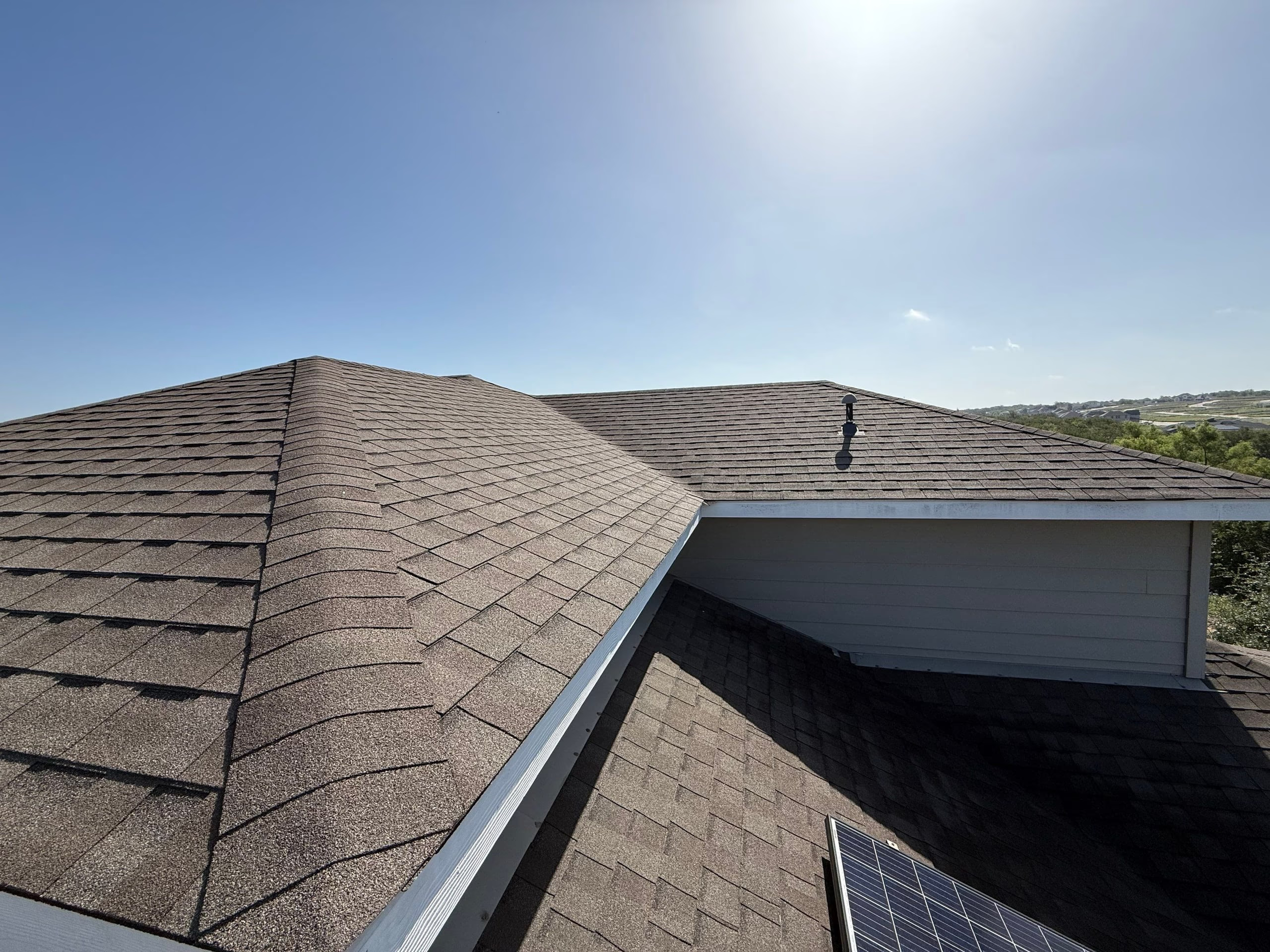
GAF Timbertex shingles, for example, come with a tough mat that resists impact from hail. I've seen them survive storms that shredded cheaper products. Owens Corning makes a line with reflective granules that help lower attic temperatures. DaVinci Roofscapes focuses on synthetic slate that mimics natural stone without the weight. All three offer warranties that cover manufacturing defects, but installation quality matters more than the warranty paper. A bad crew can void any guarantee.
If you are looking at shingles, ask about the underlayment. Products like Perma-Seal and GreenShield add a waterproof layer beneath the shingles. That extra step prevents leaks even if wind rips off a few tabs. It costs a bit more up front but pays off during the first heavy rain.
Metal Roofing for Long Life and Low Maintenance
Metal roofing has grown popular in Austin, especially on modern and farmhouse-style homes. Standing seam panels, sometimes called Star Seam, offer clean lines and exceptional durability. A well-installed metal roof can last fifty years with minimal care. It sheds water fast and reflects heat better than dark shingles.
The downsides: metal costs more and requires skilled labor. A mistake in the crimping or at the drip edge can lead to leaks that are hard to trace. Expansion and contraction from temperature swings also need proper design. If the installer does not account for movement, panels can buckle.
I've seen Mule-Hide products used on commercial buildings with great results. For residential work, many contractors prefer local suppliers because they understand the climate. Always ask about the gauge of the metal. Thicker gauge means more durability but also higher weight and cost.
Tile Roofing and Slate: Classic Beauty With Heavy Demands
Tile roofing gives a distinctive look that fits many Austin neighborhoods. Clay tiles handle heat well and last decades. But they are heavy. Your roof structure must support the extra load. If you are considering tile, have an engineer check the framing.
Slate roofing offers a natural stone appearance that ages gracefully. It resists fire and impact better than almost any other material. However, slate is expensive and requires specialized installation. Few crews in Central Texas have real experience with it. That means higher labor costs and longer wait times.
Both tile and slate need solid roof ventilation to prevent moisture buildup underneath. Without it, the decking can rot from below while the tiles look fine from above. A ridge vent and proper soffit intake are essential.
Specialty Options: Roll Roofing and Barn Roofing
Roll roofing is sometimes used on sheds, workshops, or low-slope additions. It comes in large sheets that you unroll and fasten down. It is cheap and quick to install, but it does not last as long as shingles or metal. I only recommend it for temporary structures or very tight budgets.
Barn roofing, on the other hand, has become a style choice for homes that want a rural feel. It usually involves metal panels with a distinctive rib pattern. The same installation rules apply: proper fasteners, good underlayment, and attention to the drip edge. Barn roofing can look great but needs the same quality as any other material.
Working With Austin Energy and City of Austin Programs
Austin Energy offers rebates for certain energy-efficient roofing upgrades. Reflective coatings and cool-roof materials can qualify. The City of Austin also has guidelines for storm-resistant construction. If you are replacing a roof after a hail event, check whether your project falls under their permitting requirements. A reputable contractor will handle that paperwork for you.
I have seen homeowners miss out on rebates because they did not ask. A simple call to Austin Energy before you start can save hundreds. Your roofer should know the program details. If they do not, that is a red flag.
How to Pick a Contractor and Get Honest Pricing
When you search for austin tx roofing, you find dozens of companies. Narrowing them down takes work. Start with the inspection. A company that offers free, no-obligation evaluations is usually confident in their work. They want to show you what they see.
Ask about their experience with the specific material you want. A crew that mostly installs shingles may not do great work on metal. Look for photos of completed projects, not just stock images. Check online reviews but take them with a grain of salt. One bad review among fifty good ones might be a competitor or a one-time mistake. Patterns matter more.
Get at least three quotes. If one quote is much lower than the others, ask why. Sometimes it means they skip steps: no underlayment, no drip edge, no ventilation. Those shortcuts cost you later. Honest pricing means a fair price for a complete job, not the cheapest number.
A Final Word on Long-Term Value
Your roof is a long-term investment. The cheapest option today often leads to repairs in five years. The most expensive might be overkill for your home. Balance your budget with the climate demands. In Austin, heat and storms are the main enemies. Choose a material that handles both, and make sure the installation includes proper decking, ventilation, and flashing.
I have seen Tectum used in commercial projects for its acoustic and fire properties, though it is rare in residential work. For most homes, a quality asphalt shingle from Owens Corning or GAF, or a standing seam metal roof, provides the best mix of cost, durability, and curb appeal. Whichever you pick, invest in the details that keep water out and heat at bay. That is the kind of wisdom that comes from years on the job, not from a brochure.